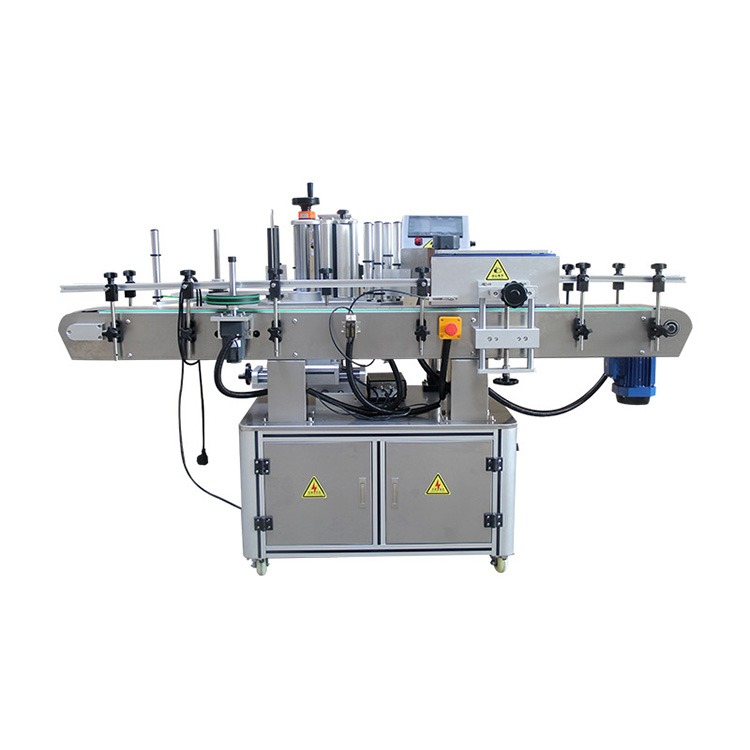
Choosing among labeling machine manufacturers in China starts with your container, label and production requirements. A supplier suitable for small glass vials may offer a different configuration from one needed for flat bottles, carton seals or printed logistics labels. Compare the proposed handling method, sample results and delivery scope before comparing prices.
This guide compares 15 manufacturers across adhesive, sleeve, hot-melt, rotary, pharmaceutical and print-and-apply labeling, explains VTOPS capabilities and provides a practical purchasing checklist. Published by VTOPS, an equipment manufacturer included below, this is a supplier guide rather than an independent ranking. Other manufacturers are described using their linked official product information; selection suitability must be confirmed for each project.
Labeling Machine Manufacturers in China: Comparison at a Glance
The following comparison highlights equipment categories and questions worth discussing with each supplier. The list is selective, not exhaustive, and its order does not represent a quality score. Product ranges may change; request a current proposal for your actual containers and labels.
On smaller screens, scroll horizontally to view the complete table.
| Manufacturer | Equipment focus | Applications to discuss | Standalone and integration scope |
|---|---|---|---|
| VTOPS | Round bottle, flat, side, top/bottom, specialty, print-and-apply and hot-melt labeling | Bottles, jars, small cylindrical products, boxes, pouches and paperboard | Semi-automatic stations, automatic machines, inline heads and packaging line configurations |
| FINECO | Bottle, surface, card/bag, sealing-label and print-label equipment | Standard or customized adhesive-label applications | Semi-automatic and automatic equipment; production-line labeling categories |
| S-CONNING / Shell-Conning | Syringe, vertical and horizontal bottle, double-side and flat labeling | Pharmaceutical containers and other packaged products | Dedicated labeling machines and application-specific systems |
| SKILT | Side and multi-side labeling, including its SLM range | Square or multi-faceted bottles, jars, cans and boxes | Conveyor-based machines with configuration options; confirm upstream/downstream interfaces |
| NPACK | Liquid packaging equipment with bottle labeling | Projects combining liquid filling, capping and labeling | Individual equipment and integrated liquid packaging lines |
| Xinli | Round, flat, side, bottom, inline-head and print-label equipment | Standard and customized product-handling applications | Semi-automatic, automatic and customized labeling systems |
| Shanghai Xinhua | Shrink sleeve, hot-melt OPP and self-adhesive labeling | Bottles, cups and other containers requiring sleeve or roll-fed labels | Label applicators, shrink tunnels and label supply |
| Guangzhou YD Pack | Hot-melt, wet-glue, pressure-sensitive, rotary and combined labelers | Food, beverage, wine, pharmaceutical and personal-care containers | Standard and customized automatic systems |
| Suzhou DPS Machinery | Hot-melt, self-adhesive and sleeve labelers | Round or square bottles and irregular sleeve-label containers | Labelers, bottle handling, drying and conveying systems |
| Tengyi | Shrink-sleeve applicators and heat tunnels | Round, oval, square, flat and shaped containers | Applicator and shrink-tunnel configurations |
| Shanghai Suren | Automatic shrink-sleeve labeling and heat-shrink tunnels | Sleeve-label applications requiring downstream shrink equipment | Labeling and end-of-line packaging equipment |
| Shanghai Procus | Shrink-sleeve applicators | Full-body, partial-body and tamper-evident sleeve applications | Specialist sleeve-label machinery |
| S-CONNING / Shell-Conning | Syringe, vertical and horizontal bottle, double-side and flat labeling | Pharmaceutical containers and other packaged products | Dedicated labeling machines and application-specific systems |
| Shanghai Leboning | Rotary, vertical and horizontal vial/ampoule, canister and BFS labelers | Pharmaceutical small containers | Standalone equipment and pharmaceutical labeling lines |
| Hangzhou Beajet | Real-time print-and-apply systems and labeling arms | Cartons, logistics labels, variable data and production-line marking | Print engines and integrated print-and-apply systems |
| ZFI | Rotary labeling machines | Beverage, brewery, condiment and consumer-product packaging | Rotary systems and on-demand packaging solutions |
VTOPS: Labeling Machine Manufacturing Capabilities
VTOPS manufactures labeling equipment across several container formats, application positions and automation levels. Its experience covers semi-automatic workstations, automatic bottle and surface labelers, specialized feeding arrangements, printing combinations and line integration. This breadth gives buyers several ways to approach a project, including applications that need more than a standard round-bottle machine.
The practical strengths are product-handling flexibility, multiple labeling positions, customized configurations and packaging-line integration. The following equipment and VTOPS video examples explain these capabilities. Each project still requires its own container and label assessment; compatibility across a product range does not mean every format can run on one machine without adjustments.
Round Bottle Labeling Solutions
For cylindrical bottles, jars and cans, VTOPS offers automatic round-bottle labeling as well as configurations suited to different handling requirements. The VTOPS automatic round bottle labeling machine provides a starting point for conventional cylindrical containers. Positioning requirements, label coverage and bottle stability determine the appropriate arrangement.
Small cylindrical products need a different handling discussion. The VTOPS-L823 horizontal vial and ampoule labeler uses horizontal conveying for products that are difficult to keep stable upright. Buyers should supply actual samples to assess feeding, support and label application, particularly when several diameters share a production schedule.
Site Video of Automatic Round Bottle Labeling Machine | VTOPS-L-RB
Flat, Side, Top and Bottom Labeling
VTOPS also manufactures equipment for packaging that needs labels on flat surfaces, opposite sides or underneath the product. Examples include the VTOPS-L831 flat-surface labeler, the VTOPS-L962 double-side labeler, and dedicated top/bottom configurations. Product support and alignment are selected around the surface being labeled.
A useful example of combined capability is VTOPS’s cream-bottle labeling line. Its official video description identifies a bottle unscrambler together with round-bottle, flat and bottom labeling equipment. This illustrates the scope for coordinating multiple application positions in one project. The number of heads and the handling sequence should follow the required label layout.
Cream Bottle Three-head (Side & Flat & Bottom) Labeling Line+ Bottle Unscrambler
For a simpler surface application, see the VTOPS-L831 plastic packaging lid demonstration. Flat oval containers are another application to discuss, illustrated by the channel’s VTOPS-L962 glass wine bottle example. A demonstrated configuration should be evaluated against your own bottle profile and artwork.
Specialized Labeling for Different Packaging Formats
VTOPS’s manufacturing experience includes paging, corner-sealing, carton, folding-label and small-product applications. These projects depend on how the item is separated, located and held during application. For example, stacked flat packaging needs controlled feeding, while a corner label requires the applicator to follow a defined fold across adjoining surfaces.
The VTOPS-L832 paging labeler and VTOPS-L833 corner-sealing labeler represent two different approaches. For manually loaded products, the VTOPS-L803 tabletop rolling labeler offers another format to evaluate. Semi-automatic handling can be appropriate when product positioning remains a manual task.
Triangle Acrylic Box Semi Automatic Desktop Plane Labeling Machine VTOPS-L803
Print-and-Apply and Hot-Melt Glue Labeling
VTOPS’s TTO labeling machine with a QR-code system combines labeling with a variable-data application. The associated paperboard demonstration is described as using thermal transfer overprinting and QR-code data collection. When specifying this type of project, define the printed fields, data source, readback requirements and response to an unreadable code.
📌 Paperboard Large Custom Size TTO Labeler with QR Code Data Collection System VTOPS-L965
VTOPS also offers hot-melt glue bottle labeling equipment. This is a separate process from applying self-adhesive labels: label handling, glue application and container transport must be specified together. Discuss the label material, container geometry, change parts and intended operating conditions before choosing a configuration.
Custom Configurations and Production Line Integration
VTOPS can approach labeling as a standalone operation or as part of a larger packaging project. Movable flat and side labeling heads provide options for adding an application station to a suitable conveyor. Equipment selection must account for product spacing, conveyor height, direction of travel and the available labeling surface.
The VTOPS-L851 plane labeling head has a paperboard paging example, while the VTOPS-L852 side labeling head addresses side application. These configurations allow feeding and labeling to be considered together, instead of treating the applicator as an isolated purchase.
Automatic Paperboard Plane Production Line Labeling Head with Paging VTOPS-L851
For projects involving filling and capping, VTOPS can discuss labeling within a complete powder bottling line. This creates a single equipment-planning discussion covering container transfer and line balance. The agreed layout should identify accumulation space, start/stop signals and responsibility for each interface.

Find a labeling configuration for your product
Share container photos, label samples and target output so VTOPS can assess the handling method and suitable equipment configuration.
Other Labeling Machine Manufacturers in China
The manufacturers below are grouped by their stated product specialties, since a shrink-sleeve applicator, pharmaceutical vial labeler and print-and-apply system solve different packaging tasks. The links lead to each supplier’s own product information. Use them to shortlist companies, then confirm current models, factory scope and sample performance directly with the supplier.
Pressure-Sensitive and Container-Surface Labeling
- FINECO lists automatic and semi-automatic bottle, surface, card and pouch labelers, along with carton-sealing and production-line equipment. Compare its standard machine options for general self-adhesive labeling. FINECO product range.
- Shanghai SKILT offers wrap-around, top/plane, front/back, top/bottom and multi-side categories. Its SLM range addresses one-label application around square or multi-faceted bottles, jars and cans. SKILT SLM multi-side labeler.
- Dongguan Xinli lists round, flat, side, bottom, inline-head and online-printing machines, including customized models. Its range is useful to compare for application-specific product handling. Xinli product range.
- Shanghai NPACK combines labeling with liquid-line equipment such as bottle handling, filling, capping and conveying. Consider it when line integration is part of the project scope. NPACK production-line overview.
Shrink-Sleeve and Heat-Shrink Labeling
- Shanghai Xinhua Machinery lists shrink-sleeve applicators and tunnels, hot-melt OPP equipment and self-adhesive labelers. It also states that it supplies labels alongside machinery. Xinhua labeling equipment.
- Tengyi focuses on shrink-sleeve applicators and tunnels for round, oval, square and other container shapes. Confirm sleeve material, shrink method and the container range on your proposed model. Tengyi TY-P150 sleeve labeler.
- Shanghai Suren describes automatic sleeve applicators, heat-shrink tunnels and related end-of-line equipment. It is another supplier to consider when application and shrink stages need to be discussed together. Suren equipment overview.
- Shanghai Procus specializes in shrink-sleeve machinery, including full-body, partial-body and tamper-evident applications. Ask how film shrink behavior and tunnel setup will be evaluated for your bottle. Procus sleeve-labeling range.
Hot-Melt, Wet-Glue and Rotary Bottle Labeling
- Guangzhou YD Pack lists hot-melt, wet-glue, pressure-sensitive, rotary and combined labelers for food, beverage, winery, pharmaceutical and personal-care packaging. Specify the label stock and container before comparing configurations. YD Pack official range.
- Suzhou DPS Machinery presents hot-melt, self-adhesive and sleeve labelers alongside unscramblers, drying systems and conveyors. Consider its listed scope when a labeler must connect to bottle preparation equipment. DPS Machinery overview.
- ZFI specializes in rotary labeling systems for beverage, brewery, condiment and consumer-product applications. Compare rotary equipment against your container, label process and required line layout. ZFI rotary-labeling overview.
Pharmaceutical Vial, Ampoule and Syringe Labeling
- S-CONNING / Shell-Conning lists prefilled-syringe systems and vertical, horizontal, double-side and flat labelers. Its product range is relevant where product orientation and specialized pharmaceutical-container handling drive machine selection. S-CONNING product catalog.
- Shanghai Leboning lists rotary, vertical and horizontal labeling systems for vials and ampoules, plus canister and BFS equipment. Its range is focused on pharmaceutical packages and small cylindrical containers. Leboning pharmaceutical labeling systems.
Print-and-Apply and Variable-Data Labeling
- Hangzhou Beajet focuses on real-time print-and-apply systems, labeling arms and print engines for cartons and production lines. Confirm printer compatibility, data handoff, application surface and whether code inspection is included. Beajet print-and-apply systems.
These suppliers illustrate how broad the market is; this directory is not a ranking and does not independently certify any supplier’s claims. For every shortlisted machine, ask for a test using the actual product, label and operating conditions.
How to Choose the Right Labeling Machine Configuration
When comparing labeling machine manufacturers in China, first give each supplier the same application specification. Otherwise, apparently similar quotations may describe different processes, automation levels or accessories.
- Identify the label process. Specify self-adhesive labels, hot-melt labeling, shrink sleeves or printing and application. These processes require different equipment; confirm the supplier’s scope for the process you actually need.
- Describe the container and its condition. Provide dimensions, material, shape and whether it arrives empty or filled. Include taper, seams, flexible walls and surfaces that are difficult to support.
- Define every label position. Mark the required position on a drawing or sample. Distinguish a wraparound label from separate front/back labels, and identify bottom, top or corner applications.
- Set the required operating output. Explain the production target and upstream/downstream conditions. Require a proposed output for the actual container, label size and configuration.
- List every format change. Give minimum and maximum product dimensions and the changeover frequency. Ask what is adjusted, what is replaced and how settings are restored.
For example, a flat bottle requiring two separate labels needs an alignment and application arrangement different from a cylindrical jar carrying one wraparound label. One combined machine may be proposed, but the supplier should identify the setup and change parts for each format.
For roll-fed self-adhesive labels, confirm the core, outside diameter, liner width, label gap and winding direction before ordering consumables. VTOPS’s labeling-machine overview and label-roll orientation guidance explains why the roll presentation must match the applicator.
How to Evaluate a Labeling Machine Manufacturer
Request an Application Test with Your Samples
Send production-representative containers and labels, including difficult formats. Agree on the run duration, quantity and acceptance criteria before testing. Ask for a continuous-run recording and labeled samples, then examine placement, wrinkles, bubbles, lifted edges and the required barcode area. A short demonstration helps explain a configuration but does not establish long-run production performance.
Record the container, label, operating speed and configuration alongside the result. Treat an advertised speed as a starting point for discussion. Accuracy claims also need a defined measurement method and reference position. For adhesion-related defects, see VTOPS’s discussion of label edge lifting and warping; evaluate the label material, adhesive and application conditions together.
Verify the Proposed Build and Delivery Scope
Ask who handles mechanical design, fabrication, assembly, programming and final testing. Review the proposed layout and component list, and request a factory visit or live equipment review where useful. Separate standard equipment from optional printers, inspection devices, feeders, spare parts and format tooling. Include the agreed sample-test requirements in the order documentation.
Check Printing, Inspection and Support Requirements
If labels carry barcodes or QR codes, define both the data check and print-quality requirements. Successful reading by one scanner is not the same as formal barcode-quality verification. GS1 explains how compliant barcode verifiers measure and grade printed symbols. Specify separately whether the project needs code reading, data matching, print-quality verification or rejection of failed products.
Finally, compare training, manuals, remote support, spare-part availability and any on-site work. Clarify warranty coverage and exclusions in writing. These details help buyers compare labeling machine manufacturers in China on the complete delivered system.
What to Include in Your Labeling Machine Inquiry
A clear inquiry lets suppliers select a configuration and explain its limits. Use this checklist when requesting proposals from labeling machine manufacturers in China.
| Item | Information to provide |
|---|---|
| Containers or products | Photos, material, dimensions, shape, tolerances and representative samples; indicate empty or filled handling. |
| Labels | Artwork, size, material, adhesive or glue process; for label rolls, include liner width, gap, core, outside diameter and unwind direction. |
| Application | Label quantity and positions, wrap coverage, registration reference and acceptable placement deviation. |
| Production | Required output, operating schedule, number of formats and changeover frequency. |
| Line interfaces | Standalone or inline use, layout, conveyor height/direction, space and available utilities. |
| Additional functions | Printing, code reading, inspection, reject handling, data connection, feeding or collection requirements. |
| Delivery and acceptance | Destination, installation/training scope, documentation, spares and agreed sample-test criteria. |
Compare quotations using the same scope. Automation level, number of labeling heads, product-handling difficulty, printers, inspection and change parts all affect the proposed cost. Confirm whether freight, installation and training are included. A lower machine price may simply reflect fewer supplied functions.
Request a proposal for your labeling project
Send your container dimensions, label artwork, target output and line layout. VTOPS can review the application and prepare a proposal with the required equipment and options.
Frequently Asked Questions
What types of labeling machines does VTOPS manufacture?
VTOPS manufactures semi-automatic and automatic equipment for round bottles, flat surfaces, sides, top/bottom application and specialized packaging formats. Its capabilities also include inline labeling heads, print-and-apply configurations and hot-melt glue labeling. The proposed machine depends on the label process, product-handling requirements and production target.
Can VTOPS customize a labeling machine for my container?
Yes. VTOPS can assess customized feeding, positioning, label application and line-integration requirements. Provide actual containers and labels, with drawings where available. The application review should establish the achievable configuration, required tooling and test criteria before the equipment specification is finalized.
Can one machine label both round and flat bottles?
A combined configuration may accommodate both, but compatibility depends on dimensions, label positions and the handling arrangement. Ask the supplier to identify the parts and adjustments required for each bottle. Approval for several formats does not imply simultaneous mixed-format operation.
Can a labeling machine be integrated into an existing filling line?
Yes, where the labeler and line can be matched. Confirm conveyor height, travel direction, product spacing, throughput and control interfaces. The proposal should also define accumulation, stop/start behavior and responsibility for any changes to the existing equipment.
What samples are needed for a labeling test?
Provide representative containers or products and production-quality labels, including the most difficult variants. For roll labels, supply the intended liner and winding arrangement. Agree on sample quantities with the supplier so the test can include setup, repeat runs and assessment of the required formats.
How should I compare quotations from labeling machine manufacturers in China?
Compare the proposed configuration, sample-test outcome, sustained output under stated conditions, format tooling and support scope. Check whether feeding, printing, inspection, spare parts, installation and training are included. Evaluate the complete working system against your application instead of choosing by the headline machine price.

