Buying a Double Side Sticker Labeler Machine: A Complete Buyer’s Guide

Table of Contents

10 Things to Consider Before Buying a Double Side Sticker Labeler Machine

Buying a double side sticker labeler machine is an important investment for manufacturers looking to improve product appearance, labeling consistency, and production efficiency. Whether you package cosmetics, pharmaceuticals, food, beverages, chemicals, or household products, selecting the right labeling equipment can significantly reduce labor costs while ensuring every product leaves your production line with professional-looking labels.

However, not every labeling machine is suitable for every application. Bottle shapes, label materials, production speed, labeling accuracy, and future expansion plans all influence which machine is the right choice. Purchasing equipment based only on price often leads to production issues, frequent adjustments, and expensive downtime.

This buying guide explains the most important factors to evaluate before purchasing a double side sticker labeler machine, helping you choose equipment that delivers reliable performance and long-term value.

In this guide, you’ll learn:

  • What a double side sticker labeler machine is
  • How it works
  • Industries where it is commonly used
  • The 10 most important buying considerations
  • Common purchasing mistakes to avoid
  • Frequently asked questions

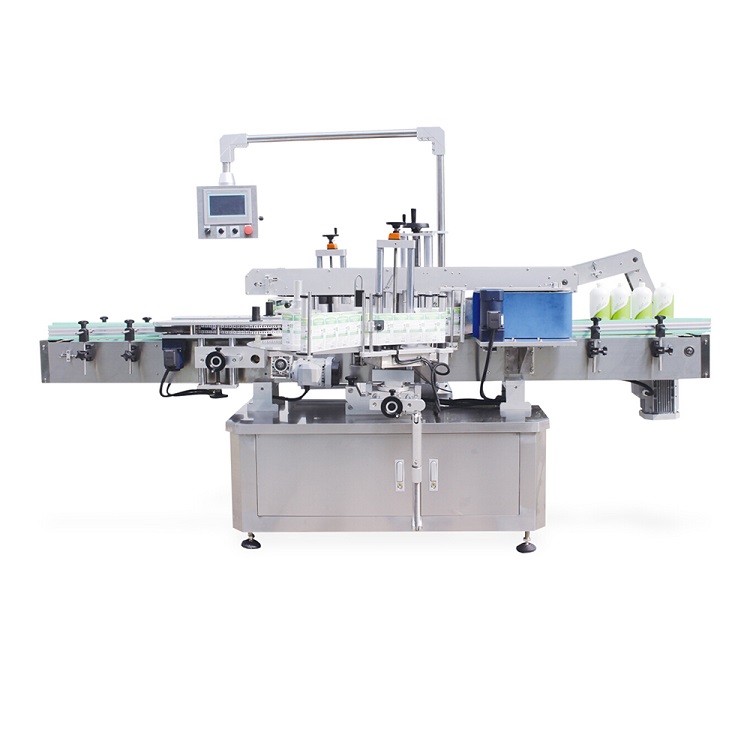
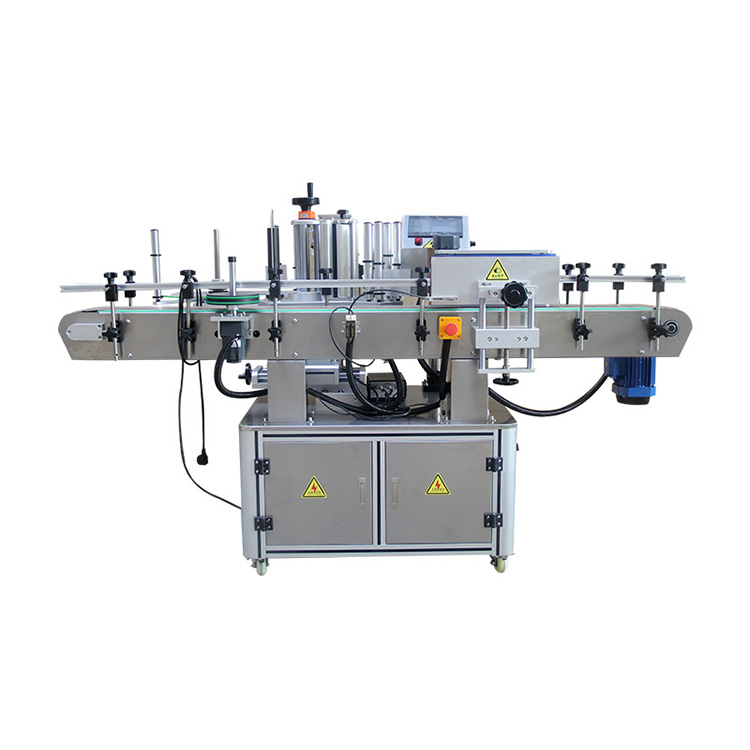
Automatic Double Side Sticker Labeler Machine


What Is a Double Side Sticker Labeler Machine?

A double side sticker labeler machine, also known as a double-sided labeling machine or front and back labeling machine, is an automatic labeling system designed to apply self-adhesive labels to two sides of a container during a single pass through the machine.

Unlike a single-side labeler, which only labels one surface, a double-side machine can simultaneously apply labels to the front and back of a bottle or container. Some customized systems can also perform top and bottom labeling depending on the product design.

Modern double-sided labeling machines are widely used for:

  • Flat bottles
  • Oval bottles
  • Square containers
  • Rectangular bottles
  • Round bottles (with optional wrap-around configuration)
  • Plastic containers
  • Glass bottles
  • Metal cans

Today’s automatic labeling systems typically integrate servo motors, PLC controls, touch-screen operation, photoelectric sensors, and optional vision inspection systems to achieve consistent labeling accuracy even at high production speeds.


How Does a Double Side Sticker Labeler Machine Work?

The working principle is relatively straightforward but requires precise synchronization between the conveyor system, bottle positioning mechanism, and labeling heads.

  1. Containers enter the conveyor automatically.
  2. A bottle separation device spaces each container evenly.
  3. Guide belts stabilize the bottle position.
  4. Sensors detect the incoming container.
  5. The PLC synchronizes conveyor speed with label dispensing speed.
  6. The front and rear labeling heads apply labels simultaneously.
  7. Rollers or brushes press the labels firmly onto the container surface.
  8. The finished product exits to the next packaging station.

Optional systems can also include:

  • Date code printing
  • Batch number printing
  • QR code printing
  • Barcode verification
  • Vision inspection
  • Automatic reject systems

These additional functions improve traceability and quality control, especially in pharmaceutical and food production environments.


Where Are Double Side Sticker Labeler Machines Used?

Double-sided labeling machines are suitable for a wide variety of industries because many products require separate front and back labels. The front label usually displays branding and product information, while the back label contains ingredients, nutritional facts, instructions, or regulatory information.

Food & Beverage

  • Sauces
  • Cooking oil
  • Seasoning bottles
  • Juice bottles
  • Honey
  • Coffee products

Pharmaceutical Industry

  • Medicine bottles
  • Healthcare supplements
  • Chemical containers

Cosmetics

  • Shampoo bottles
  • Lotion bottles
  • Skincare products
  • Perfume containers

Chemical Industry

  • Lubricants
  • Cleaning chemicals
  • Industrial additives

Daily Household Products

  • Detergent bottles
  • Disinfectants
  • Liquid soap
  • Cleaning products

If your production line handles multiple bottle shapes, selecting a flexible labeling machine capable of fast changeovers can significantly improve operational efficiency.


Why Choosing the Right Labeling Machine Matters

Many manufacturers focus primarily on equipment price when buying a labeling machine. In reality, the purchase cost is only a small portion of the machine’s lifetime operating expense. A poorly matched machine can lead to frequent downtime, inaccurate label placement, increased maintenance, and costly production delays.

Choosing the right machine helps ensure:

  • Consistent label positioning
  • Higher production efficiency
  • Lower labor costs
  • Reduced product waste
  • Faster product changeovers
  • Lower maintenance expenses
  • Better product appearance
  • Greater flexibility for future production expansion

Before buying a double side sticker labeler machine, it is worth evaluating your production requirements carefully rather than simply comparing machine prices.


1. Consider Your Container Shape and Size

The first and perhaps most important consideration is the type of containers your production line uses.

Different labeling machines are optimized for different container geometries. While some machines can handle multiple bottle types, others are specifically designed for flat or rectangular containers.

Before requesting a quotation, prepare the following information:

  • Container material (plastic, glass, metal)
  • Bottle height
  • Bottle width
  • Bottle thickness
  • Bottle weight
  • Label position
  • Label dimensions

If your factory manufactures several products using different bottle sizes, ask whether the labeling machine supports quick changeovers and recipe storage. This can save considerable setup time when switching between production batches.

Providing sample bottles and label drawings to the equipment supplier before production is often the most effective way to ensure the machine is configured correctly for your application.


2. Evaluate Labeling Accuracy

Labeling accuracy directly affects product appearance and brand image. Even a high-quality product may appear unprofessional if labels are crooked, wrinkled, or inconsistently positioned.

Modern double side sticker labeler machines typically achieve labeling accuracy of ±1 mm or better under stable production conditions. However, actual performance depends on several factors, including bottle consistency, conveyor stability, label quality, and machine configuration.

When evaluating a labeling machine, ask the supplier about:

  • Servo-driven or stepper motor labeling system
  • Label positioning accuracy
  • Bottle alignment mechanism
  • Automatic label correction
  • Photoelectric sensor brand
  • Optional vision inspection system

If your products are sold in supermarkets or exported internationally, accurate label positioning becomes even more important because packaging quality strongly influences consumer purchasing decisions.


3. Choose the Right Production Speed

Production speed is often the first specification buyers compare, but maximum speed is not always the most important factor.

Instead of asking, “How fast can the machine run?”, consider asking, “How fast can it run consistently while maintaining labeling accuracy?”

Typical production capacities include:

Production Requirement Recommended Speed
Small Batch Production 20–40 bottles/min
Medium Production 40–80 bottles/min
High-Speed Production 80–150 bottles/min
Large Industrial Lines 150+ bottles/min

Selecting a machine with slightly higher capacity than your current production demand provides room for future expansion without replacing the entire labeling system.


4. Check Label Size and Material Compatibility

Not all labels behave the same during application. Label size, thickness, adhesive properties, and backing paper quality all influence labeling performance.

Before purchasing a machine, verify that it supports your label specifications.

Typical label types include:

  • Paper labels
  • PET labels
  • Transparent labels
  • Matte labels
  • Glossy labels
  • Tamper-evident labels

You should also confirm the maximum and minimum supported:

  • Label height
  • Label length
  • Roll diameter
  • Core diameter

Providing sample labels to the manufacturer before production allows them to verify compatibility and optimize machine settings.


5. Consider the Automation Level

The level of automation should match your production requirements and available labor resources.

Generally, labeling machines are available in three categories:

Type Best For
Manual Very small production volumes
Semi-Automatic Growing businesses with limited output
Fully Automatic Continuous industrial production

Fully automatic double side sticker labeler machines can integrate directly with filling, capping, induction sealing, coding, and packaging equipment, creating a complete production line with minimal operator intervention.

If your business plans to increase production over the next few years, investing in an automatic system is usually the more economical long-term choice.


6. Evaluate Changeover Time

Many factories manufacture multiple products using different bottle sizes or label formats. In these situations, fast changeover becomes a major productivity advantage.

Look for features such as:

  • Tool-free adjustment
  • Quick-release guide rails
  • Digital position indicators
  • Recipe storage on the HMI
  • Automatic parameter recall

A machine that can switch between products in just a few minutes significantly reduces downtime and improves production flexibility.


7. Maintenance and Spare Parts Availability

Even the most reliable labeling machine requires routine maintenance. Choosing equipment with standardized components and readily available spare parts minimizes production interruptions.

Ask your supplier:

  • Which spare parts should be stocked?
  • Are electrical components internationally recognized brands?
  • How quickly can replacement parts be delivered?
  • Is remote technical support available?

Machines built using components from Siemens, Schneider Electric, Panasonic, SICK, Omron, or other internationally recognized manufacturers are generally easier to maintain worldwide.


8. Plan for Future Production Expansion

Your current production volume may only require 50 bottles per minute today, but what happens when customer demand doubles?

Instead of purchasing equipment solely for today’s needs, consider whether the machine can support future upgrades.

Questions worth asking include:

  • Can labeling heads be upgraded?
  • Can the conveyor be extended?
  • Can the machine integrate with additional packaging equipment?
  • Does the PLC support future expansion?

Planning ahead often costs far less than replacing an entire production line a few years later.


9. Evaluate the Manufacturer and After-Sales Support

A labeling machine is a long-term investment, and choosing the right manufacturer is just as important as selecting the right machine. A supplier with extensive industry experience can help you avoid costly mistakes during equipment selection, installation, and production.

Before making your purchase, consider the following questions:

  • How many years has the manufacturer been producing labeling machines?
  • Do they have experience in your industry?
  • Can they provide customer references or successful case studies?
  • Do they offer installation guidance and operator training?
  • Is remote technical support available?
  • How quickly can spare parts be delivered?

It is also beneficial to work with a manufacturer that produces complete packaging lines rather than standalone machines. This ensures better compatibility if you plan to add filling, capping, induction sealing, coding, or cartoning equipment in the future.


10. Consider the Total Cost of Ownership

Many buyers compare only the purchase price when selecting a double side sticker labeler machine. However, the initial investment represents only part of the machine’s lifetime cost.

A lower-priced machine may require more maintenance, consume more labor, and experience frequent downtime, resulting in higher operating costs over time.

When calculating your investment, consider:

  • Initial purchase price
  • Installation costs
  • Operator training
  • Routine maintenance
  • Replacement parts
  • Production downtime
  • Electricity consumption
  • Expected machine lifespan

Choosing a reliable machine with stable performance often delivers a much lower total cost of ownership over the life of the equipment.


Common Mistakes When Buying a Double Side Sticker Labeler Machine

Many manufacturers encounter unnecessary production issues because important details are overlooked during the purchasing process. Avoid these common mistakes:

  • Choosing a machine based solely on price.
  • Ignoring future production expansion.
  • Not providing actual bottle and label samples to the supplier.
  • Overlooking changeover time for different bottle sizes.
  • Purchasing equipment without confirming spare parts availability.
  • Ignoring after-sales service and technical support.
  • Selecting a machine that cannot integrate with future packaging equipment.

Careful planning before purchasing will help maximize your return on investment while reducing future production problems.


Double Side Sticker Labeler Machine Buying Checklist

Item Check
Container shape and dimensions
Label size and material
Required production speed
Labeling accuracy
Automation level
Changeover time
Maintenance requirements
Spare parts availability
Future production expansion
After-sales support

Frequently Asked Questions

Can one labeling machine handle different bottle sizes?

Yes. Most modern automatic double side sticker labeler machines support multiple bottle sizes through adjustable guide rails and programmable parameter settings. For manufacturers running multiple products, machines with recipe storage can significantly reduce changeover time.

Can round bottles be labeled using a double side sticker labeler machine?

Yes. Many models can label round bottles with optional wrap-around labeling mechanisms, while others are specifically designed for flat, oval, or rectangular containers.

What labeling accuracy can I expect?

Most industrial labeling machines achieve labeling accuracy of approximately ±1 mm under stable operating conditions. Actual performance depends on bottle consistency, conveyor stability, label quality, and machine configuration.

What production speed should I choose?

The ideal speed depends on your production requirements. It is generally recommended to select a machine with additional capacity to accommodate future business growth.

Can a labeling machine be integrated into a complete packaging line?

Absolutely. Automatic labeling machines are commonly integrated with bottle unscramblers, filling machines, capping machines, induction sealers, inkjet printers, checkweighers, and cartoning systems to create a fully automated packaging line.

How long does it take to change between different products?

Depending on the machine design, changeover may take anywhere from a few minutes to half an hour. Machines with digital position indicators and stored recipes can significantly reduce setup time.


Conclusion

Buying a double side sticker labeler machine involves much more than comparing prices. The right equipment should match your container design, production speed, labeling requirements, and future expansion plans while providing reliable long-term performance.

By carefully evaluating container compatibility, labeling accuracy, automation level, maintenance requirements, and supplier experience, you can invest in a labeling solution that improves productivity, enhances packaging quality, and supports future business growth.

On Key

Related Posts

Scroll to Top